


Autumn Berlin, Awaiting Georgian Wine
 October 10, 2026
As Mark Twain once said, “No other city has such a feeling of space, freedom and abundance as Berlin.” On 28 November, wine lovers arriving in Berlin will certainly experience all three, as the German capital hosts Amber Georgia, an international festival dedicated to Georgian low-intervention wines.
The idea behind the festival belongs to two Georgian winemakers, Zurab Mgvdelashvili and Iago Bitarishvili. More than 70 Georgian winemakers will take part in Amber Georgia Berlin, presenting over 200 wines to visitors. This is no longer simply a small presentation of wines from one country. The scale is much greater. Georgian wine is coming to Berlin to showcase its diversity.
From New York to Berlin
Those who follow the story of Georgian wine may remember that Amber Georgia began its journey last year in New York.
In November 2025, the first edition of the festival dedicated to Georgian amber wine was held at Industry City in Brooklyn. Around 30 Georgian wineries from different regions presented their wines directly to American wine lovers, sommeliers, importers and wine professionals. According to the National Wine Agency of Georgia, the event exceeded expectations and once again demonstrated the interest in Georgian amber wine in the US market.
After New York, the amber wine festival is moving in a different geographical direction. Berlin was certainly not chosen by chance. The city has an important place in the world of unconventional and natural wine.
Interest in Georgian wine in Germany is not new. For European wine consumers, Georgian qvevri wine has long ceased to be a completely unfamiliar product. This gives the Berlin festival a particular advantage: rather than introducing Georgian wine to a distant market, it brings Georgian winemaking into the heart of Europe's extensive natural and independent wine scene.
Qvevri — and Beyond
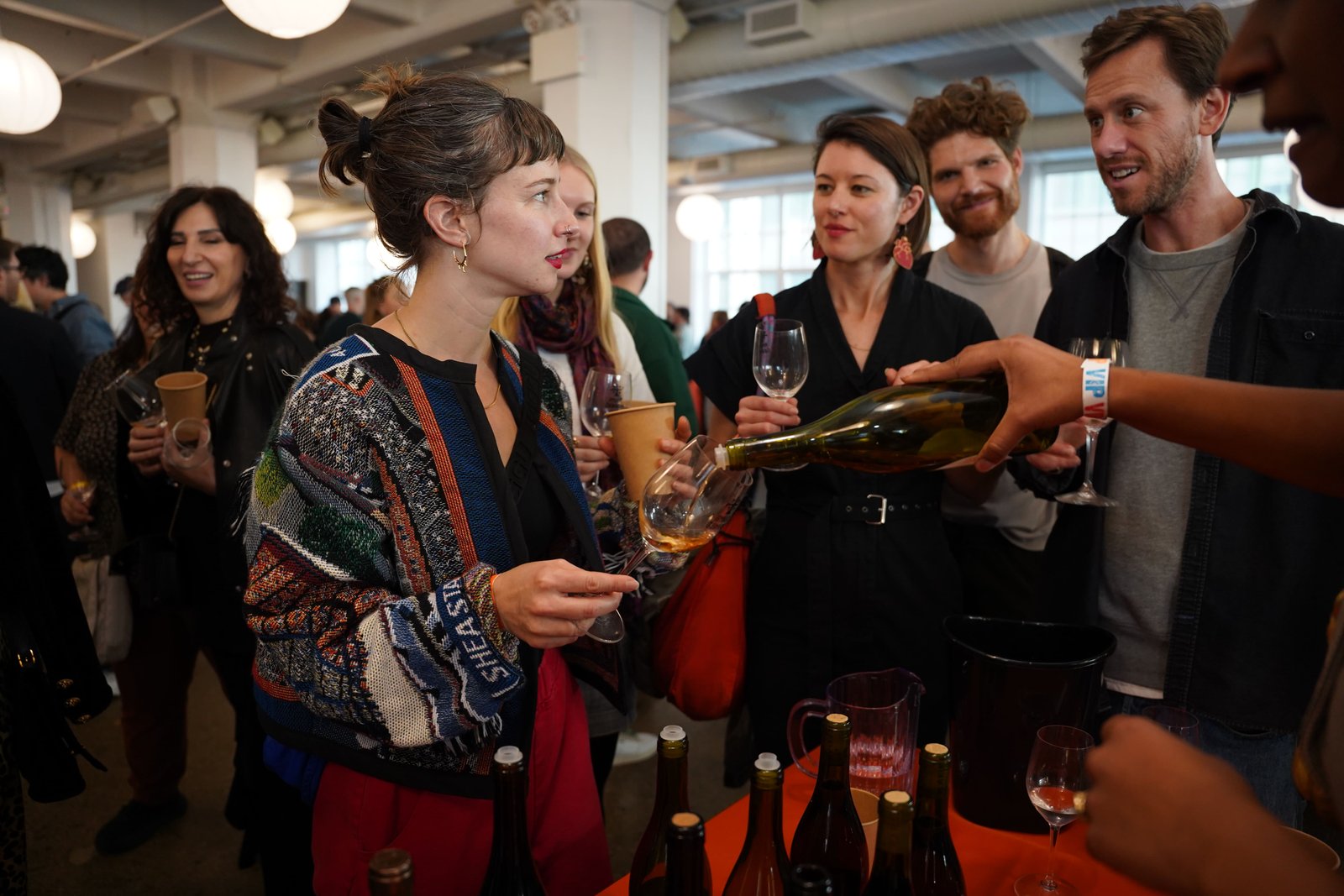
One of Amber Georgia's distinctive features is that the festival offers an international audience more than simply the opportunity to taste wine. Meeting the winemaker is at the heart of the festival concept.
Visitors can not only taste a wine, but meet face to face the person who tended the vineyard, cleaned the qvevri and made the wine. This is also what makes small wineries so fascinating: very often, one person is the grower, winemaker, marketer and sales manager all at once.
Moreover, low-intervention wine is not simply a product in a bottle. Behind it lies an approach to nature and the environment, the way the vineyard and soil are cared for, the grape variety, the winemaker's decisions and, often, remarkably compelling family stories.
Different Regions of Georgia Under One Roof
The geographical and regional diversity of Georgian winemaking will also be on display in Berlin.
The participating wineries come from Kakheti, Kartli, Guria, Imereti, Lechkhumi, Racha and Samegrelo, representing small family wineries from across Georgia. Among them are both established names and newer winemakers who have entered the field only relatively recently.
In a single day, visitors in Berlin will be able to discover Tsolikouri and Tsitska from Imereti, Chinuri and Goruli Mtsvane from Kartli, rare grape varieties from Racha, qvevri wines from Kakheti and lesser-known indigenous varieties from Samegrelo.
In the long term, this diversity could become one of the defining strengths of Georgian natural wine.
Why Amber?
The name of the festival is not accidental. Amber wine — wines made with extended skin contact, often fermenting and ageing with the grape skins and other solid parts — is today regarded as one of the world's most intriguing wine styles. For many wine lovers abroad, this style has become one of the defining ways of discovering Georgian wine.
In Georgia, however, this is certainly not a modern trend. It is part of a traditional winemaking practice that goes back thousands of years.
This is why the idea behind Amber Georgia is about more than promoting a particular wine style. It is about showing international audiences that what many people have only recently discovered as Orange Wine has existed in Georgia for centuries.
In this sense, Amber Georgia is also an attempt to translate the history of Georgian wine into a contemporary language.
Europe Could Prove Even More Important
Holding a Georgian wine festival in New York was historically significant. For the first time, a large group of Georgian small-scale winemakers had the opportunity to meet American consumers in one place.
Berlin has its own advantages. Georgian wine can move more easily through Europe, both geographically and logistically. For Georgia's small family wineries, the European market can be particularly interesting because their production volumes often do not match the requirements of large supermarket chains, but can fit much better with specialised wine bars, wine shops and small importers.
A Georgian winemaker producing only a few thousand bottles a year may not be able to compete with large companies on volume in the global market. But they can compete through their story, unique grape varieties, individual terroir and the distinctive character of their wines.
Space, Freedom, Abundance...
Not so long ago, Georgian wine at international trade fairs was often represented by only a handful of well-known winemakers. The organisers of Amber Georgia have helped make it possible for dozens of Georgian small wineries to come together in one place.
Georgian winemaking is no longer simply the work of a few pioneers. It is gradually developing into a sector of its own. More importantly, it now has its own audience, both in Georgia and beyond its borders.
And if we return once again to Mark Twain's words, on 28 November Berlin will certainly have space, freedom and — above all — abundance.
And this time, that abundance will have a name: Georgian wine.
Levan Sebiskveradze